
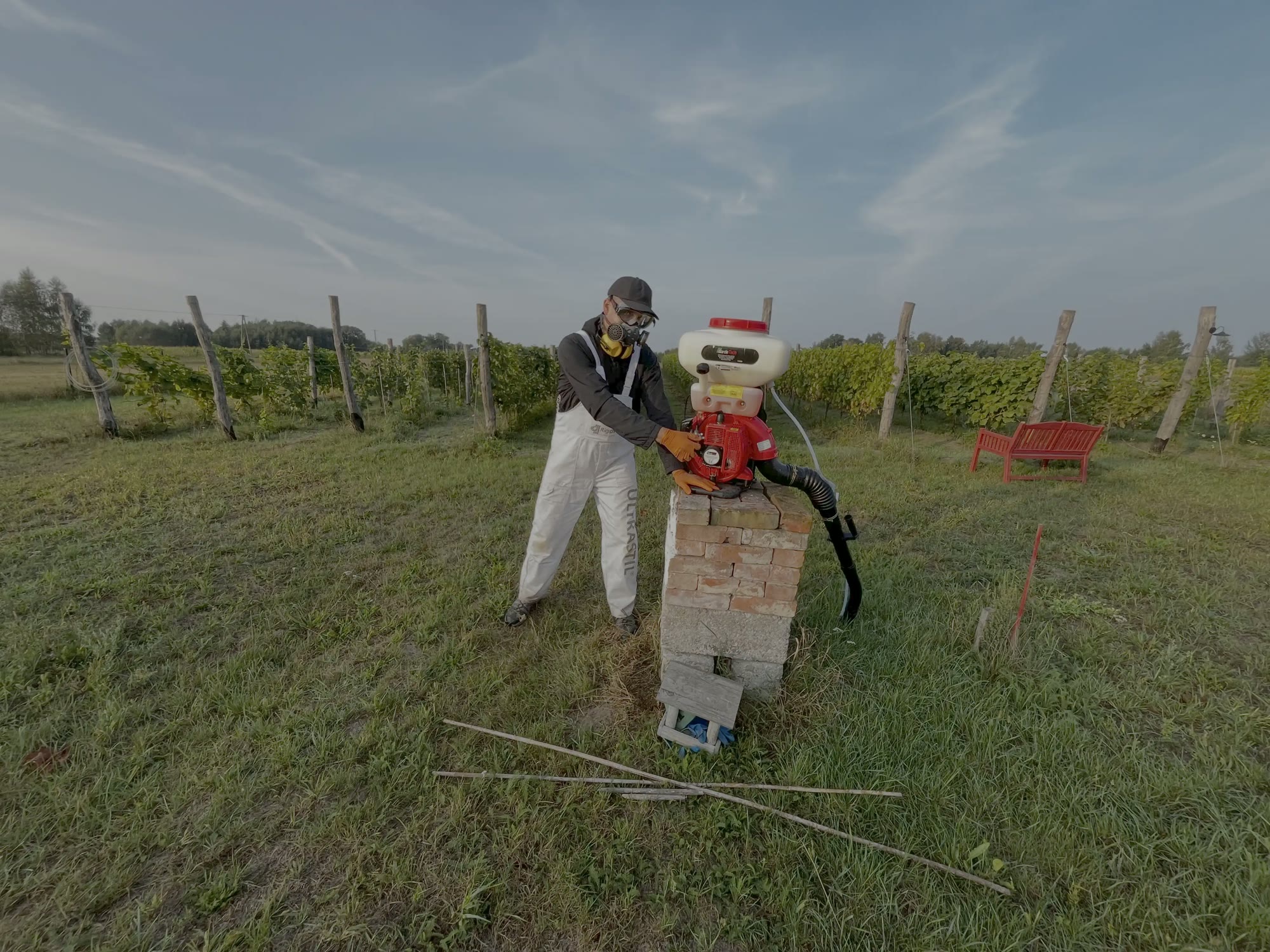
From the 2027 season, records of plant protection product applications have to be kept in electronic, machine-readable form across the European Union. The rule applies to every professional user, with no area threshold, so a small family vineyard is covered just like a large estate. Here is the EU-level picture, with a clear note on where national rules add detail.
What changes from 2027
Keeping a spray diary is nothing new. The change is about its form. A paper notebook, a binder, or a file that a program cannot process automatically stops being enough. Records have to be kept and stored in a machine-readable format, meaning one a computer can read and process without anyone retyping it. In practice that means files such as CSV, XML or JSON.
One misunderstanding is worth clearing up straight away. A scanned notebook saved as a PDF is not a machine-readable format. Neither is a photo of a page. What counts is the structure of the data, not the image of a sheet of paper. The requirement comes from EU Regulation 2023/564, which sits on top of the record-keeping obligation in Regulation 1107/2009 and applies in all member states.
Who it applies to
The obligation covers every professional user of plant protection products. There is no area threshold. Whether you farm a fifth of a hectare or fifty hectares, if you apply these products professionally, the requirement applies to you. This is the point that surprises small growers most, so it is worth stating plainly: a small vineyard is not exempt.
What a record has to contain
The scope of a single entry follows the EU rules. In short:
- product name and authorisation number,
- date and time the treatment started,
- dose per hectare,
- the parcel and its area,
- the crop, identified by its EPPO code (grapevine is VITVI),
- the growth stage of the plant on the BBCH scale.
One field deserves special attention. The BBCH growth stage is a mandatory field. It is the entry easiest to skip or guess, and at the same time the easiest to fill automatically if a system knows the development history of your vineyard. We wrote separately about why BBCH stages matter.
Penalties, and why they vary
Failing to keep or store the required records is an offence, but the exact penalty is set at national level, not by the EU regulation. Depending on the country it can be an on-the-spot fine from an inspector or a larger fine through the courts. For growers who claim area-based subsidies there is a second, often heavier risk: proper record-keeping is part of cross-compliance, and gaps in it can reduce payments. The headline is simple: the format is set at EU level, the enforcement is set by your member state, so check your national rules for the specifics.
How to get ready
There is no need to wait until the last minute. Three things are worth sorting out now.
- Sort out your parcels. Know which reference parcels your vineyard sits on and the area of each block.
- List what you use. Gather your products with their authorisation numbers and pre-harvest intervals. This is the same knowledge you need for a treatment log anyway.
- Pick a tool that exports. The point is to end the season with a file in a machine-readable format, without hand-assembling tables.
In VineyardElf we are building the records module so that most of an entry writes itself. The BBCH stage is suggested from a phenological model of your vineyard, products and pre-harvest intervals come from the plant protection register, and the finished file exports in one click. The core is designed to be country-independent, with the national register, parcel geometry and export format handled as configuration rather than assumptions baked in.
Frequently asked questions
From when do electronic records apply?
The requirement covers treatments carried out from the 2027 season under EU Regulation 2023/564. Exact transitional timing can differ by member state, so check your national implementation.
Does it apply to small vineyards?
Yes. The EU rule sets no area threshold. It covers all professional users of plant protection products, including vineyards of a fraction of a hectare.
Is a scanned notebook (PDF) enough?
No. A machine-readable format is one a program can process automatically, such as CSV, XML or JSON. A scan or a photo does not meet the requirement, because it is an image rather than structured data.
What must a record contain?
Product name and authorisation number, date and time, dose per hectare, the parcel and its area, the crop (EPPO code), and the growth stage on the BBCH scale. BBCH is a mandatory field.
This is the EU-level picture based on Regulation (EU) 2023/564 and Regulation 1107/2009. National transposition, registers, penalties and exact timing vary by member state. As of August 2026. Informational only, not legal advice.