Standard weather stations measure the weather two metres above the ground. The trouble is that the vine lives lower, in dense foliage, where the microclimate is entirely different. It is there, right at the leaf, that the risk of fungal disease is decided. So we are building a sensor that measures conditions exactly in that spot.
Why leaf microclimate matters more than weather from the mast
The fungi that attack vines need moisture. Downy mildew (Plasmopara viticola) needs water on the leaf and the right temperature to infect, and the severity of an outbreak depends above all on how long the leaf stays wet. Grey rot behaves much the same. Diseases like these also intensify at specific growth stages, which we wrote about in the BBCH scale post.
Leaf wetness duration depends on things a mast-mounted station cannot see: dew settling after a cool night, poor airflow inside the canopy, moisture lingering in the shade of the leaves long after the rest of the vineyard has dried. Two metres up the air can be dry while moisture near the leaf is still enough for infection. Measuring the weather high up, it is easy to miss the real threat. We would rather know how long the leaf was wet today and whether the temperature favoured the fungi. Only an on-site measurement answers that.
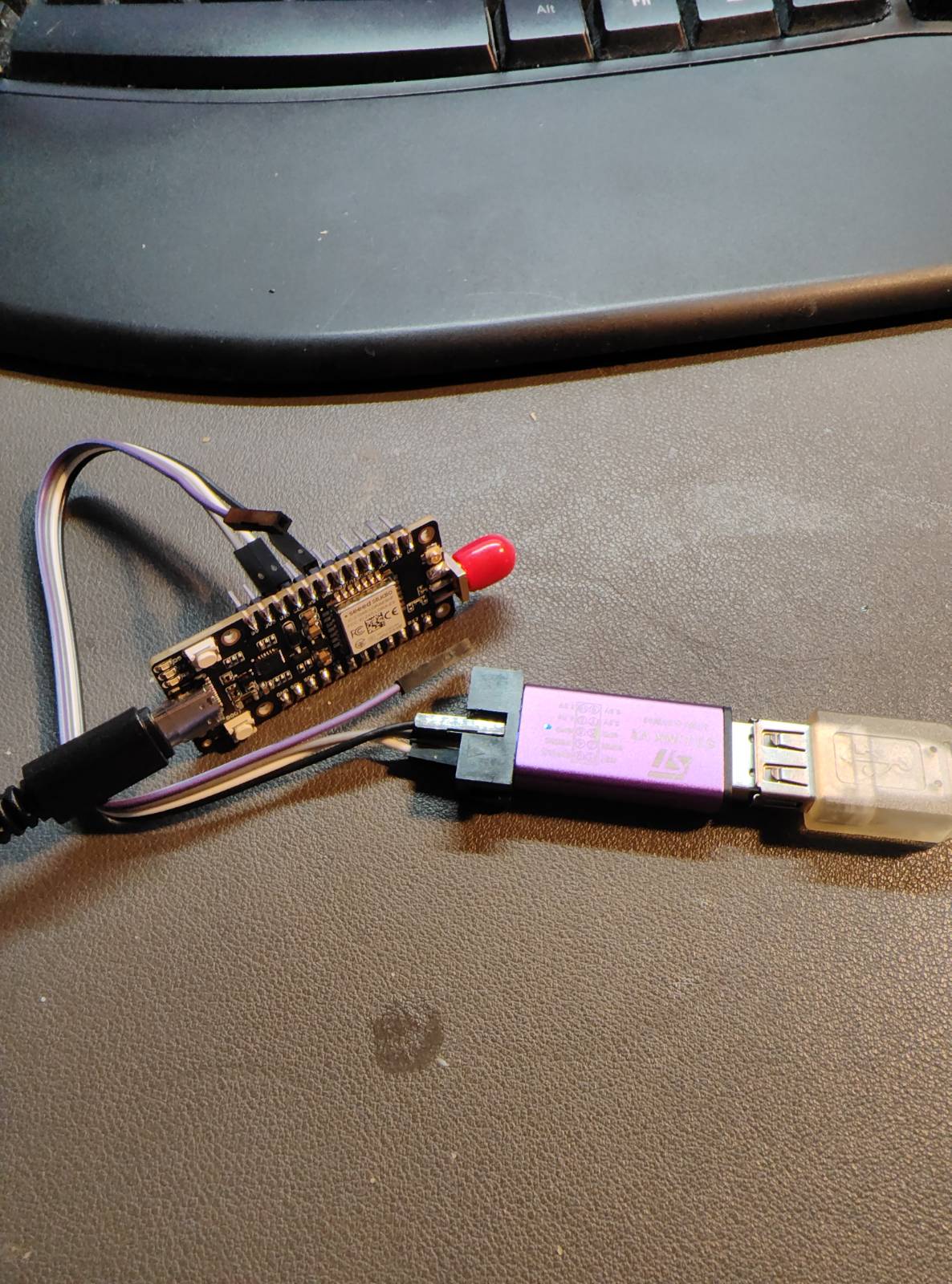
- AHT15 sensor: temperature accurate to about 0.3°C, humidity to about 2% RH
- LoRa transmission: range up to a few kilometres at low power draw
- SenseCAP M2 gateway: receives the data over LoRaWAN and sends it to the cloud
The choice of parts is deliberate. The AHT15 is cheap and accurate, and small enough to tuck close to a leaf without disturbing the conditions it measures. LoRa lets us place the sensor far from any building, deep in the vineyard, without worrying about Wi-Fi coverage or cabling. The low power draw means the whole thing can run on a small battery topped up by a solar panel.
What the data does in practice
A temperature and humidity reading is only the start. In VineyardElf we combine it with the rest of the vineyard picture: weather, growth stage, treatment history. Instead of a raw number we get an answer to a concrete question. Whether conditions in the last few hours favoured infection, and whether a protective treatment is worth doing soon. That lets you spray when it is actually needed rather than sticking to a fixed calendar. It is the same principle behind our whole side project: better a second, independent source than blind trust in a single sensor.
The measurement also pays off over time. After a few seasons you build a history that shows which parts of the vineyard are most exposed and how the microclimate shifts with the weather. That is knowledge you cannot buy, only gather with your own sensors.
Where we are now
The hardware prototype works and collects readings. The next steps are finishing the I2C link with the sensor, full LoRaWAN integration, and feeding the data into the VineyardElf dashboard so the leaf sensor becomes a regular source alongside the weather station and the forecast.
Run a vineyard and want to test the sensor yourself? Let us know.