
Nobody puts this in the brochures about winemaking, but a large part of the job is solitude. Not the romantic kind from the films, just the ordinary, mechanical kind.
Spraying is three hours on the tractor in a respirator, in the noise, in rows that all look the same. Winter pruning is weeks of walking vine to vine, at minus five, with secateurs and your own thoughts. Pressing is standing by the press and watching it drip. Cleaning tanks. Mowing the mid rows. Bottling.
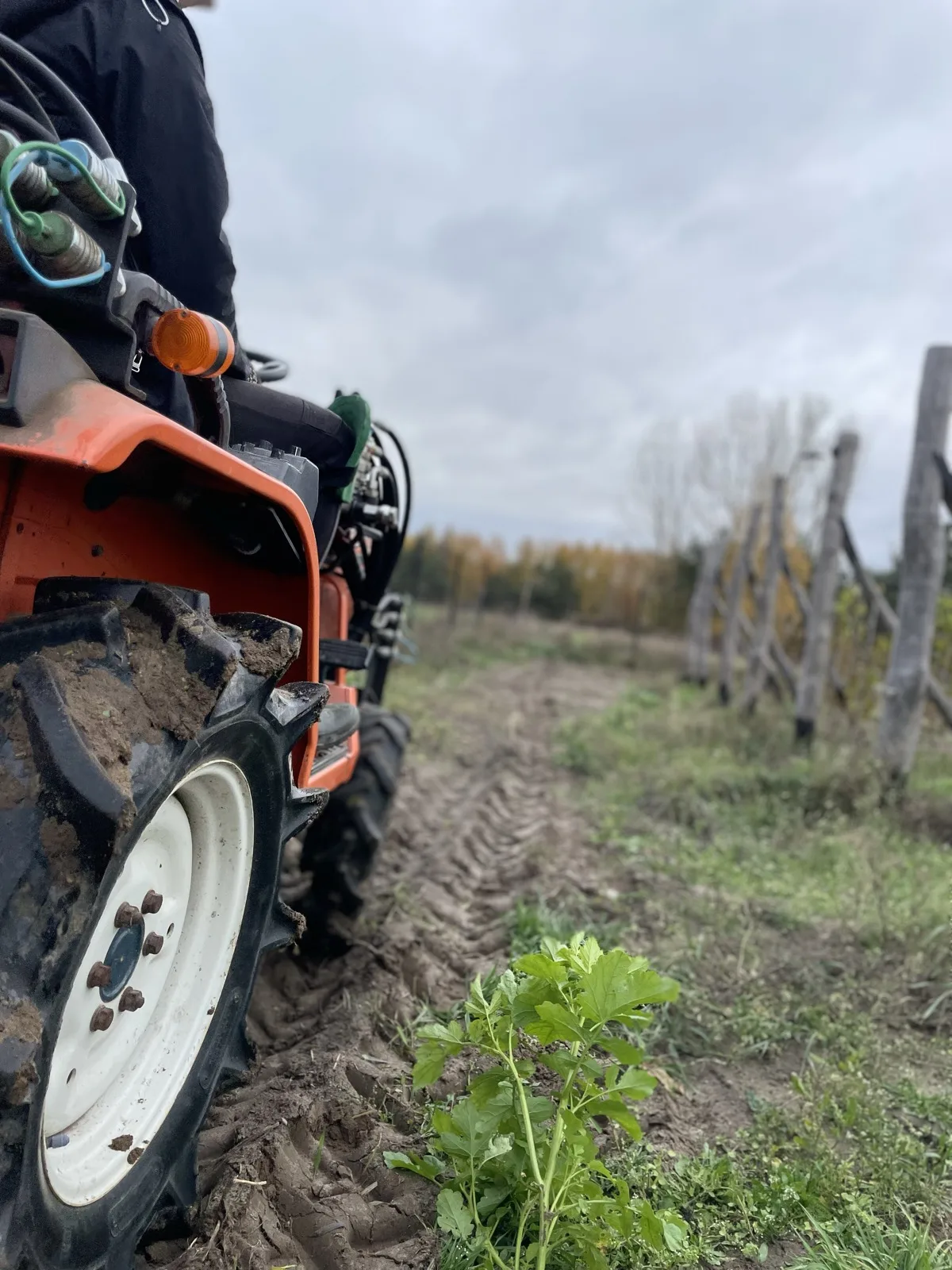
On a small vineyard this is usually done by one person. Sometimes two. And it is good, up to a point. Then you start talking to yourself.
What goes through your head in row seven
It is not that it is sad. It is that this solitary work is where most of the thinking about the vineyard happens, and almost none of it survives.
I am driving the tractor and I see a snapped wire by a post. I will not stop, because I have spray in the tank and the wind is about to pick up. I keep going. Two rows on I see a vine leaning too far into the alley. Further still I think that this exact spot had powdery mildew last year, I wonder how it looks now. And by the end of the pass I am putting together a plan in my head: maybe next year move that patch of Solaris, maybe change the training on the Seyval, maybe it is not even worth mowing this early.
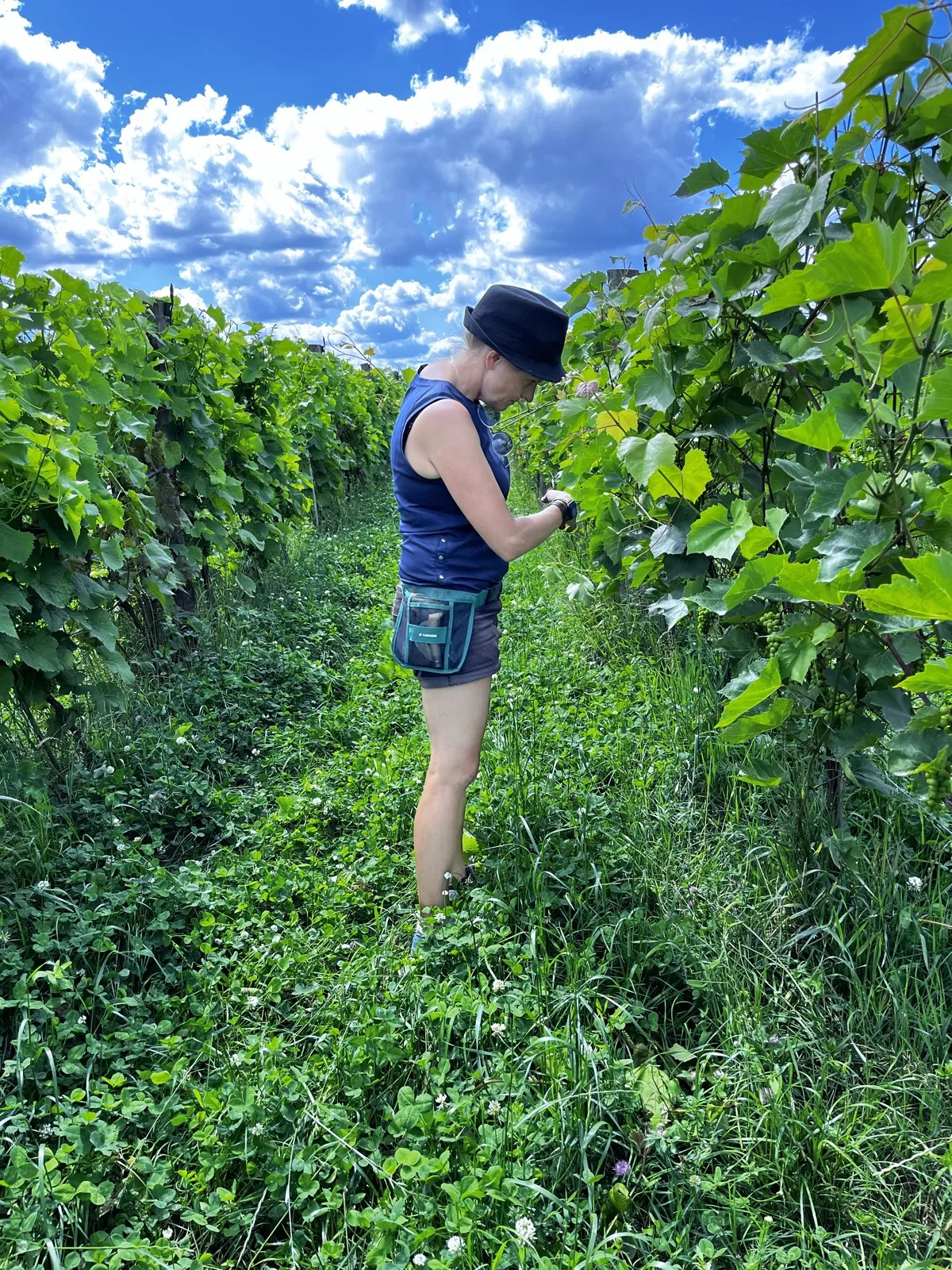
I come back, wash the sprayer, walk into the house. And out of all of that I remember roughly nothing. The wire will come back to me when the wire gives out. The Solaris plan will return in a year, on the next spray pass, in the same row, as the same thought, unrecorded again.
That is the real cost of this solitude. Not emotional. Operational.
Why filling in a form after work does not solve it
Every vineyard app I know works the same way: do the job, then sit down and type in what you did. Date, product, dose, rows, save. Nice charts, nice maps, nice records.
The trouble is that at nine in the evening after spraying the vineyard, nobody feels like sitting down to a form. And even less will anyone type in there „row 12, ninth post, wire to replace, and the Solaris in block B looked a bit weak, check it". The form has no field for that. So those things get lost.
Competitors promise you will see more data and be better organised. That is true, but it is not the problem from row seven. The problem from row seven is: my hands are dirty, there is noise, my mind is busy, and I have something to record. Now. Not in three hours.
An Elf that rides along with you
For a while now we have been building something in Elf that we provisionally call „live Elf". The idea is simple and comes straight out of how we work at Pustkowie ourselves.
You have your headphones in. Elf knows what you are doing: that you are mid spray, that you are driving through the vineyard, that you are standing by the press. And you can talk to it.
„Log a snapped wire here." Logged, with place and time. You do not have to give the row, Elf knows roughly where you are.
„Come back to this vine." A flag is created. When you return Elf asks whether you checked it, and lets you close it in one sentence.
„I used fourteen litres of spray." That goes into the treatment record, not into a note you will copy out in the evening.
But that is only the first layer. The more interesting one is different.
Thinking things through in the vineyard
Because on the tractor I do not really just want to record. I want to talk about the vineyard. With someone who knows it.
„Listen, this Solaris in block B is consistently weaker than the rest. Why do you think that is?"
And Elf does not answer with a generality from a viticulture textbook. It answers with what it knows about this particular vineyard: that block B is the coldest point according to the station, that there was a frost there in May, that last year the spray fell on full flowering for exactly that variety, while the Seyval next to it came out fine. It does not say „it is the spray". It says: that is one possible factor, here is what supports it, here is what argues against. And then you can take it further. „And if I sprayed a week later next year?" And so on, through half the pass.
This is the conversation you would have with someone who remembers the last three seasons better than we do ourselves. Except that on a vineyard there usually is no such someone. You are on your own.
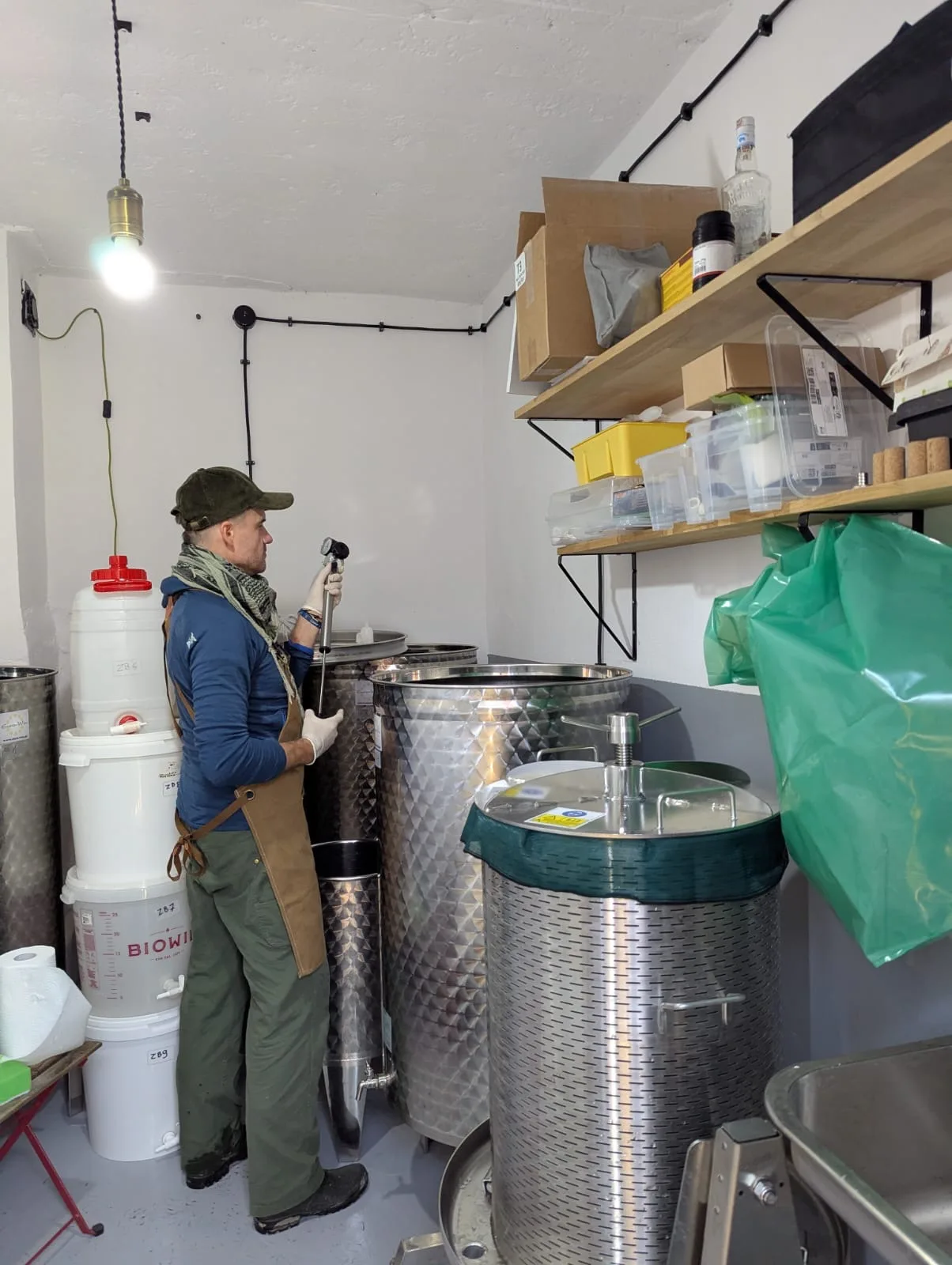
The same in the cellar. I press eighty kilos of Solaris, I get twenty two litres. I say it out loud. Elf compares it with earlier pressings of that variety on the same press and says that is clearly low, maybe worth checking before I finish. Not after the fact, in the weekly report. Now, while I can still do something about it.
This is not about Elf talking non stop
I know that worry. „AI in your ear all day" sounds like a nightmare, not like help. And rightly so.
That is why by default Elf is meant to stay quiet. You listen to your music, your podcast, whatever. Elf speaks up when you call it, when something needs recording, when it has a genuinely important reminder, or when it sees a deviation worth catching now. An important message, the audio dips, two sentences, you are back to the podcast.
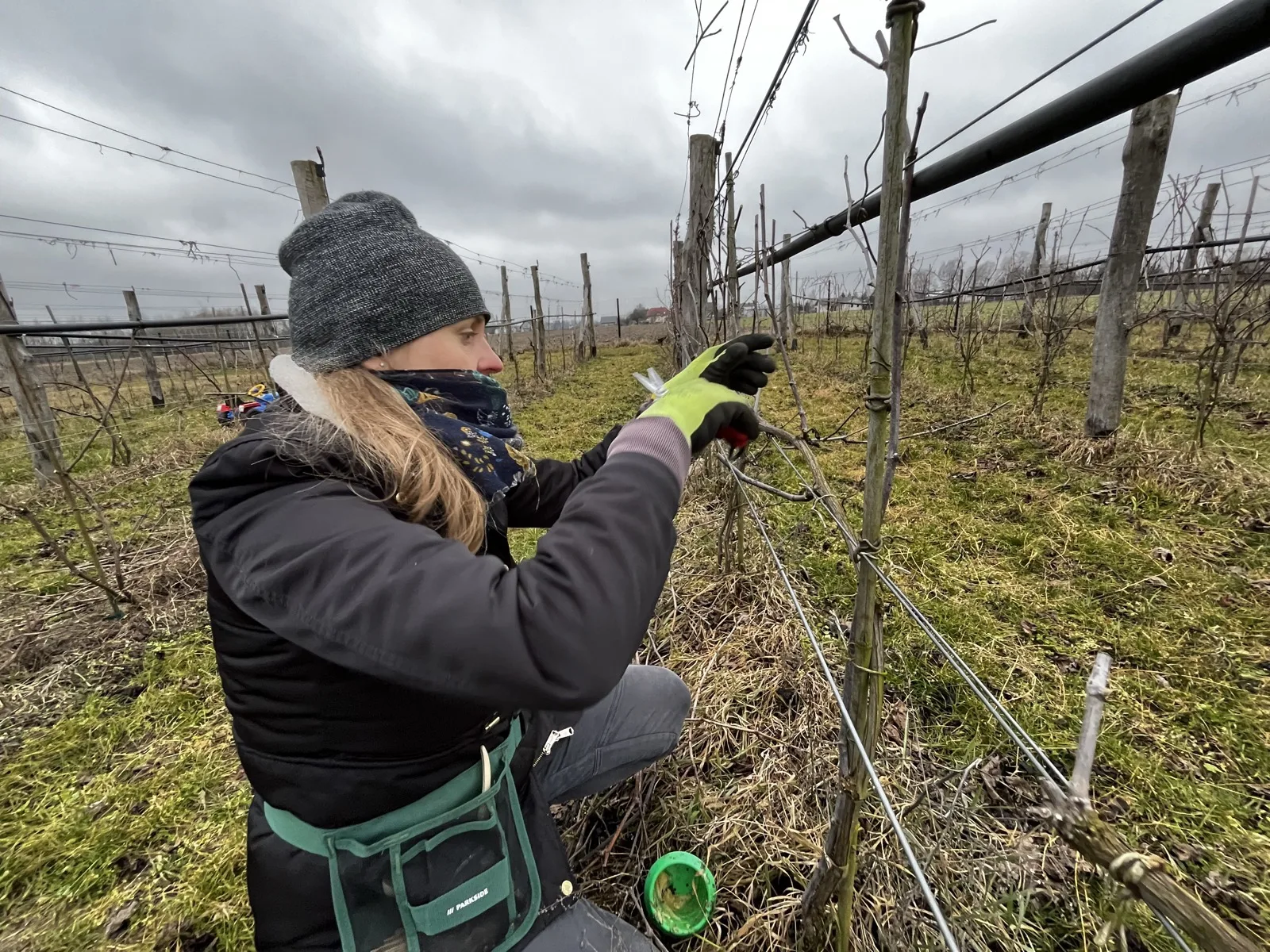
We want to offer this in three modes: quiet, where you only get the critical things; assistant, with reminders and short questions; and companion, where you can genuinely talk about the vineyard through a whole day of pruning. Which one you pick is up to you and to the day. There are days when you want silence.
Elf does not make the wine for you
This matters and I want to say it plainly, because I know how some winegrowers look at the word „AI".
Winemaking has smell, taste, intuition, hands. We do not want to replace that and we could not. Elf remembers, counts, compares, reminds, documents, suggests. The decision is yours. Always.
The idea is to take the remembering, the tapping and the paperwork off the winegrower, so there is more head left for the wine itself. And so that all those thoughts from the tractor do not vanish into the engine noise.
Where this came from
Not from market analysis. From our own tractor.
We build Elf in parallel with running Winnica Pustkowie near Siedlce. We code during the week, we spray on Saturday. And most of the ideas for what Elf should do arrive exactly in row seven, when you think „a shame nobody is writing this down".
We do not know a single vineyard app that tries to be with you during the work, rather than wait in your phone until you type in afterwards what you did. Maybe because the people who write vineyard software rarely drive the tractor themselves.
Honestly, where things stand
Voice capture, flags with a location, reminders about earlier observations: that is what we are working on now. A conversation about the vineyard grounded in the history of a specific place needs Elf to have that history first, so the longer you keep records, observations and measurements in it, the smarter these exchanges get. At the start it will know as much as you tell it.
There are also a few things we do not yet know, mostly technical: how iOS and Android will let us step politely into another app audio, how well the phone can place you in a row without extra hardware. We are testing that on ourselves.
If you work a vineyard on your own and know that row seven solitude, we would love to hear what you think through out there. We are looking for a few vineyards that would test this with us in exchange for honest feedback, including the kind that says something does not work. Write to us if this is your thing.